re:Invent 2018. Three products, one designer.
Global Accelerator, Cloud Map, and Route 53 Resolver, designed end to end with three different product teams, launched in the same week at re:Invent 2018. Then came an audit of seven years of support tickets, and what customers had been trying to tell us all along.
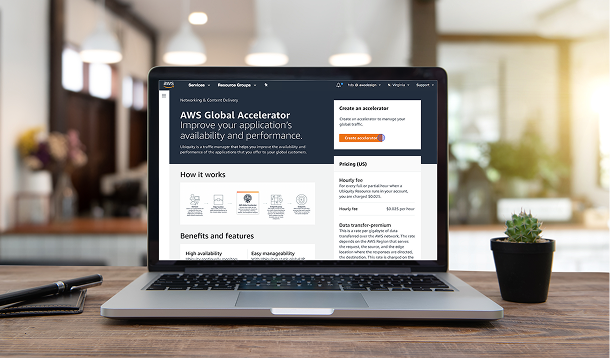
Global Accelerator at launch.
Global Accelerator. Killing my own favorite design.
Global Accelerator was the headliner, announced in the opening keynote. My first design for it was a visual editor that made the product make sense at a glance, and early research participants loved it. Then I probed how many endpoints real customers would manage, and the answer came back in the hundreds. At that scale the beautiful editor stopped being clear at all.
The wizard that replaced it made a different bet: nobody needs to see everything, they need the right next decision. Four steps, each small enough to answer without a manual, with the deep network detail behind progressive disclosure.
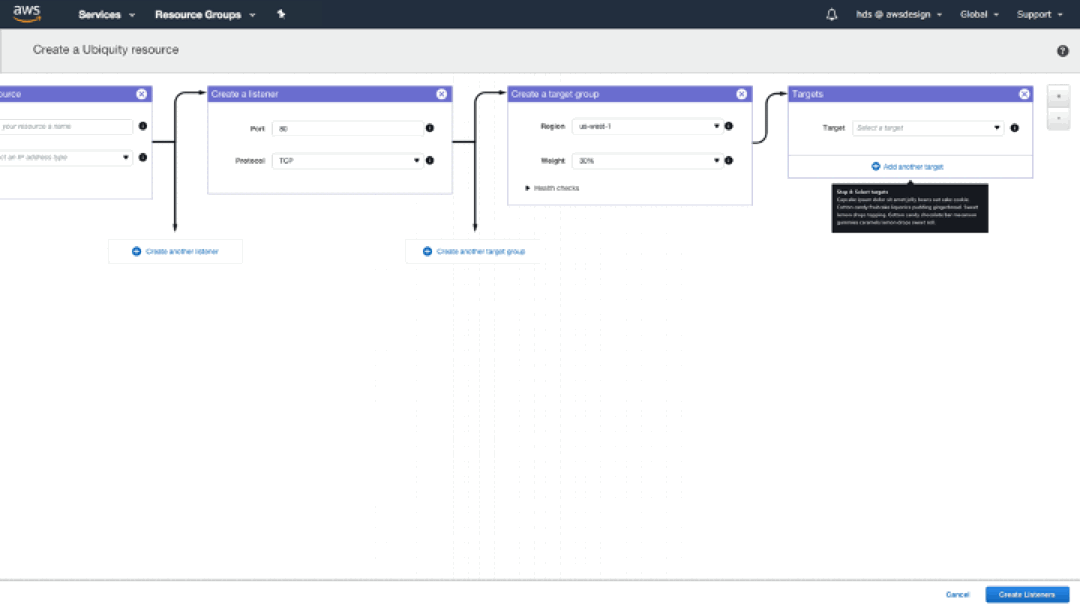
The visual editor and the wizard that replaced it, shown under the product's pre-launch codename.
“There is an almost Apple-esque usability to it… even while I understand the principles and most of the implementation details of Global Accelerator, it feels like magic to me.”
Luc van Donkersgoed, Head of AWS Technology, Sentia
independent review, 2020
Resolver. Drawn into alignment.
To design Resolver I first had to understand it, and the fastest way I know is to draw. I sat down separately with the engineering manager, the product manager, and the technical writer, diagrammed the product as each described it, and confirmed each diagram back with them. Laid side by side, the three pictures agreed at the start and at the end. It was the middle, where the magic happens, that did not match. Talking it through surfaced three kinds of gaps: places where we used the same words for different things, places where we meant the same thing but heard it differently, and a few where the question was genuinely open. We left that conversation with one story, a shared vocabulary, and a simpler flow. The final diagram did not just shape the product experience. It became the how it works diagram on Resolver’s own product page, leveraged in sales calls long after the launch.
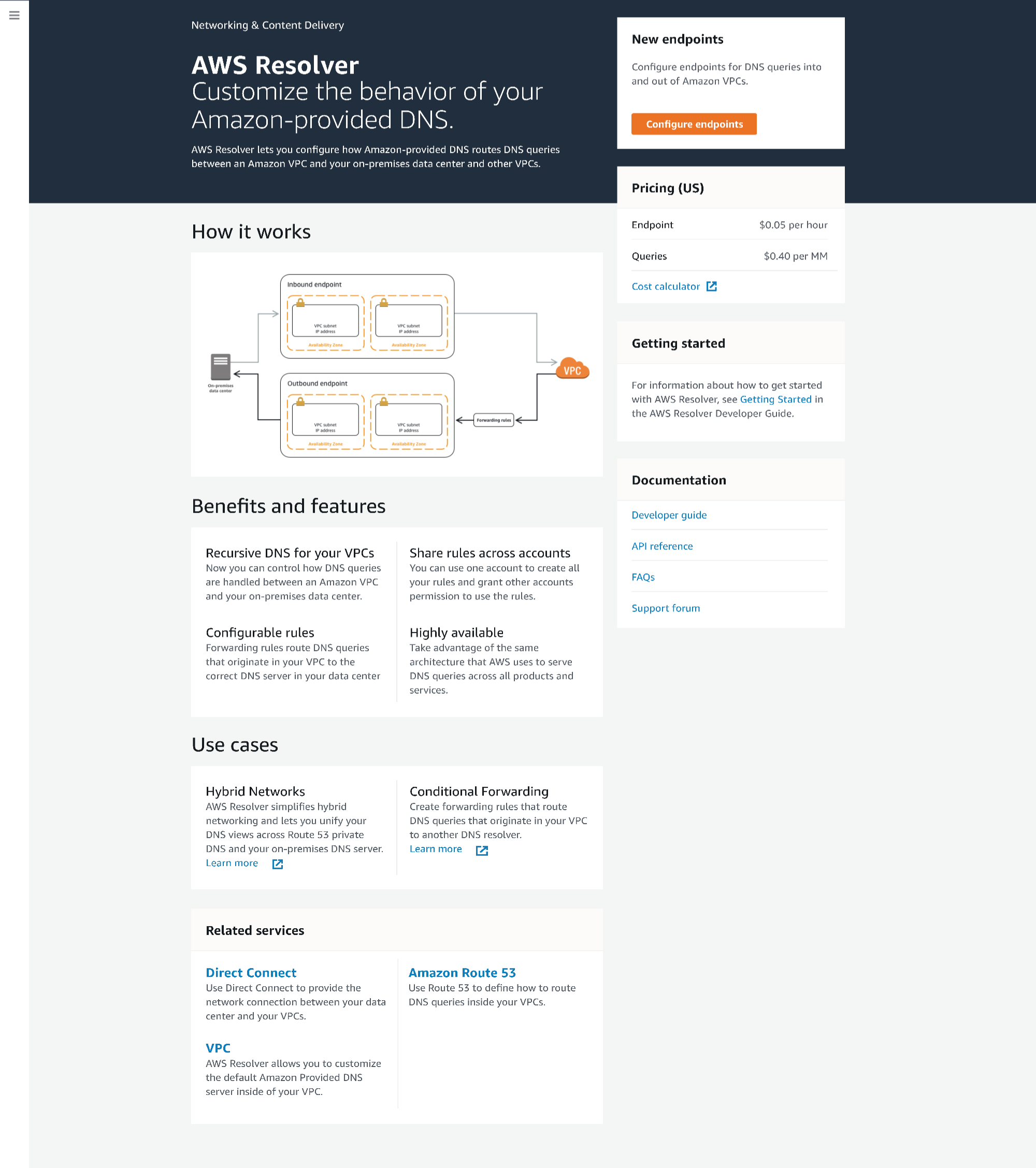
The aligned diagram, shipped as the product's own explainer.
Cloud Map. Designed down to the code.
Cloud Map let teams name their cloud resources and trust the names to stay accurate as everything underneath moved. On the surface it seemed like the perfect use case for one long setup wizard, but permissions did not line up that neatly: the middle of the flow belonged to a different permission set than the ends. So I broke it into three small wizards, each one complete on its own for whoever could run it.
The console was built by backend engineers, one of whom stepped up to do front end for the first time. A component in my design existed in the Polaris design language but had never actually been built, and nothing anywhere said so. Two weeks before re:Invent, my engineer was wrestling an unordered list into a small table, and could not figure out how to make it work. I had no access to the codebase, so I pulled what I could of Polaris into a CodePen, built the missing component, and then walked him through wiring it into his code on a call. That is how a few lines of my code shipped in the product.

The Cloud Map console. Demo data.
Route 53. Seven years of tickets do not lie.
The week after the launches I started on Route 53, whose console had accumulated years of customer complaints nobody could safely act on. I mined seven years of support tickets by hand, isolated everything that was really about the experience, and tested that list against a modernized console design. The audit showed 86% of it would be resolved. That number restructured the roadmap. The audit was written into the year's planning, and it helped win funding for a dedicated console engineering team the organization had wanted for years. I redesigned the entire console and handed it off before I left. The first piece shipped in 2020, built as designed.
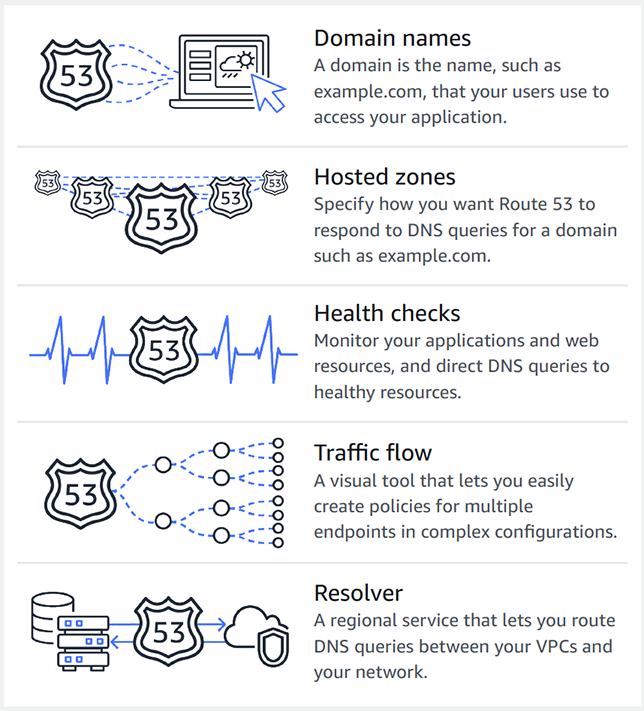
The redesigned concepts, in the shipped console. Captured November 2020.